
The Second Touch: Why Your First Follow-Up Isn't Enough
You followed up within 48 hours. You felt good about it. Then... nothing. The connection went cold. Here's the uncomfortable truth: one follow-up is almost never enough.
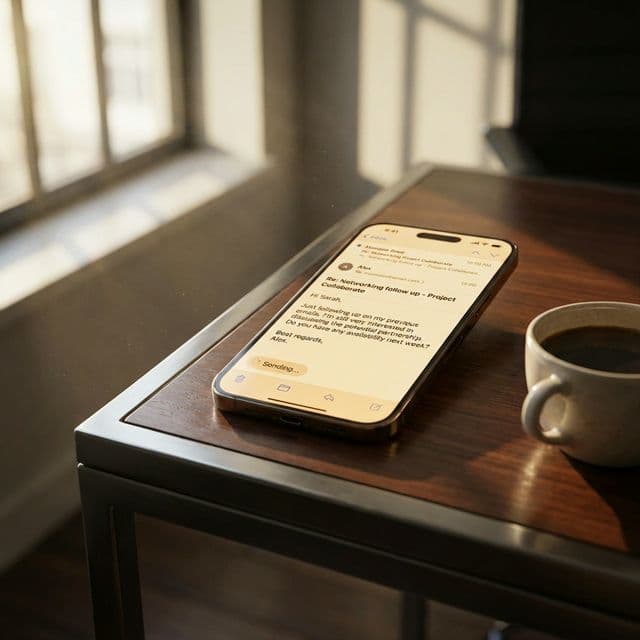
You did everything right.
You met someone interesting at a conference. You captured their contact info. You sent a personalized follow-up within 48 hours. You referenced your conversation. You added value.
And then?
Silence.
No response. No connection. No deal. Just another name in your contact list that never turned into anything.
So you moved on. Clearly, they weren't interested. Right?
Wrong.
Why doesn't my networking follow-up get responses?
Answer: Research shows that 80% of sales require 5-12 follow-up touchpoints, yet 44% of professionals give up after just one attempt. Most networking follow-ups fail not because of disinterest, but because of timing—your message arrived when they were busy, distracted, or overwhelmed. A single follow-up, no matter how well-crafted, is statistically unlikely to convert a cold connection into a warm relationship.
The One-and-Done Delusion
Most professionals treat follow-up as a single action. Send one email. Done. Move on.
This approach feels polite. It feels respectful of people's time. It feels like enough.
It's not enough. Not even close.
Here's what actually happens when you send that first follow-up:
The Inbox Reality
Your carefully crafted message lands in an inbox containing 121 other unread emails (the average for business professionals). Your contact sees it, thinks "I should respond to this," and then... gets pulled into a meeting. Answers an urgent Slack. Puts out a fire.
Your email sinks below the fold. Below the urgent. Below the visible.
It's not deleted. It's not ignored. It's just lost—buried under the relentless tide of digital communication.
The Intention-Action Gap
Your contact probably intends to respond. Studies on email behavior show that 62% of emails marked "to respond later" never get responses. The intention is real. The action never follows.
This isn't rudeness. This is modern life. Everyone is drowning.
The Memory Decay
Even if your first email was memorable, that memory is fading. Within a week, they'll struggle to recall what you discussed. Within a month, they might not remember meeting you at all.
Your single follow-up is fighting against biology itself.
The Math That Should Change Everything
Let's look at the numbers that most networkers never see:
Response rates by follow-up number:
- 1st follow-up: 18% response rate
- 2nd follow-up: 21% response rate
- 3rd follow-up: 25% response rate
- 4th follow-up: 23% response rate
- 5th follow-up: 21% response rate
The total response rate after five follow-ups? Over 50%.
Now compare that to the networking reality:
- 44% of networkers send exactly one follow-up
- 22% send two
- 14% send three
- Only 8% follow up four or more times
This means 44% of networkers are capturing only 18% of potential responses. They're leaving more than half of their potential relationships on the table—not because people aren't interested, but because they gave up too soon.
How many times should I follow up after meeting someone?
Answer: For networking contacts (as opposed to cold outreach), 3-5 touchpoints over 2-4 weeks is optimal. The key is varying your approach: different channels, different value propositions, and different asks. Research indicates diminishing returns after 5 attempts, but the second and third touches often outperform the first because they catch people at better moments.
Why the Second Touch Matters More Than the First
Here's the counterintuitive truth: your second follow-up might be more important than your first.
1. It Demonstrates Real Interest
Anyone can send one email. It takes almost no effort. But a second touchpoint signals genuine interest in the relationship.
Think about it from the recipient's perspective. When someone follows up twice, it sends a message: This person actually wants to connect. This wasn't just conference networking theater.
That signal matters. It elevates you above the dozens of other people who sent one polite email and vanished.
2. It Catches Different Moments
Your first email might have arrived during their worst day of the year. Your second email arrives on a different day, at a different time, in a different context.
The best networkers understand that timing is often more important than content. A mediocre message at the right moment beats a perfect message at the wrong one.
3. It Triggers Guilt (The Good Kind)
When your second message arrives, your contact thinks: "Oh no, I never responded to their first email."
This isn't manipulation. It's human psychology. We feel social obligation to respond, especially to people who've shown genuine interest.
Your second touch activates that obligation. It transforms "I should probably respond" into "I need to respond."
4. It Creates a Pattern
A single email is an event. Two emails are a pattern. Patterns create expectation.
When someone sees they've received two messages from you, they unconsciously expect a third. This expectation creates a subtle pressure to resolve the open loop—usually by responding.
The Anatomy of an Effective Second Touch
Not all second touches are created equal. Here's what separates the effective from the ignored:
Timing: The 5-7 Day Sweet Spot
Too soon (1-2 days) and you seem desperate. Too late (2+ weeks) and the context has evaporated.
The optimal window for a second touch is 5-7 days after your first message. Long enough to not feel pushy. Short enough that they still remember meeting you.
Channel Variation: Don't Just Send Another Email
If your first touch was email, consider making your second touch:
- A LinkedIn connection request with a personalized note
- A comment on something they posted online
- A text message (if you exchanged numbers)
- A voicemail (yes, people still listen to these)
Channel variation isn't just about trying different paths to reach them. It's about demonstrating effort. It shows you're not just running an automated sequence—you're actually paying attention.
Content Evolution: Add New Value
Your second message shouldn't just be "Hey, following up on my last email."
Each touch should add something new:
- Share an article relevant to what you discussed
- Forward an introduction you mentioned
- Reference something new they've posted or achieved
- Offer a specific resource or insight
The second touch should make them think: "Even if I ignore this, I'm glad I read it."
The Soft Re-Ask
Don't repeat your original ask verbatim. Instead, offer a lower-friction alternative:
First email: "Would you be open to a 30-minute call next week?"
Second email: "I know you're slammed—happy to make this async if that's easier. Quick question: [specific, easy-to-answer question]?"
This acknowledges that your first ask might have been too much, while still keeping the conversation moving.
What should I say in a second follow-up email?
Answer: An effective second follow-up should: (1) acknowledge time constraints without apologizing, (2) add new value not present in the first message, (3) reference a lower-friction next step, and (4) demonstrate genuine interest through specificity. Avoid simply bumping the thread—each touch should provide a reason to respond.
The Third Touch and Beyond
If two touches don't generate a response, should you keep going?
Yes—but strategically.
Touch 3: The Value Bomb
By the third touch, you need to offer something genuinely valuable. Not "thought you might find this interesting" but "I put together this resource specifically because of what you mentioned."
This could be:
- An introduction to someone they wanted to meet
- Research or data relevant to their challenge
- An invitation to an exclusive event or opportunity
- Your personal insight on a problem they mentioned
The third touch should feel like a gift, not a request.
Touch 4: The Pattern Interrupt
If three value-focused touches haven't worked, try something different:
- A handwritten note (yes, physical mail still works)
- A voice message via LinkedIn
- A creative approach relevant to their industry
One founder I know sends a $5 Starbucks gift card with his fourth touch: "I know you're busy—coffee's on me whenever you have 5 minutes." His response rate on touch four is 34%.
Touch 5: The Graceful Close
If you've tried four times without response, your fifth touch should be a graceful exit:
"I've reached out a few times and haven't heard back—I'll assume the timing isn't right. If things change, I'm always happy to connect. Wishing you all the best with [specific project they mentioned]."
This message accomplishes two things:
- It gives them a guilt-free out (maybe they were just busy)
- It creates space for them to re-engage ("Oh no, I kept meaning to respond—let me reply now")
Surprisingly, the "closing the loop" message often generates responses when nothing else did.
Building a Sustainable Follow-Up System
Knowing you should follow up multiple times is one thing. Actually doing it is another.
Here's how to make multi-touch follow-up sustainable:
1. Batch Your Follow-Ups
Don't try to manage follow-ups in real-time. Set a weekly "follow-up sprint" where you:
- Review all pending second touches
- Draft and send messages in batches
- Schedule future touches
- Move non-responders through your sequence
One hour per week of focused follow-up beats scattered attempts throughout the week.
2. Use Simple Automation
You don't need a complex CRM for this. A simple spreadsheet with:
- Contact name
- Date of first touch
- Date of second touch (scheduled)
- Date of third touch (scheduled)
- Notes on each interaction
This basic system keeps you from losing track without adding complexity.
3. Set Expectations at the Event
The best time to set up a successful follow-up sequence is at the initial meeting.
Instead of: "I'll send you an email."
Try: "I'll send you that resource this week. If I don't hear back, I'll ping you again in a week or two—I know how things get buried."
Now your second touch isn't unexpected—it's expected. And expected follow-ups don't feel pushy.
4. Track What Works
Pay attention to which touches generate responses:
- What days of the week work best?
- What times of day?
- Which channels perform?
- What types of content get engagement?
Over time, you'll develop a personalized playbook for your specific network and industry.
The Psychology of Persistence
Let's address the elephant in the room: isn't following up multiple times annoying?
Here's the reality: people who are annoyed by polite, value-adding follow-ups are not people worth having in your network.
But more importantly, the fear of being annoying is almost always overblown. Studies on follow-up perception show:
- 90% of recipients appreciate a second follow-up (they often intend to respond and appreciate the reminder)
- 85% appreciate a third (if it adds value)
- Only after 4-5 touches without value does "annoying" sentiment increase significantly
The people we're afraid of annoying? They're usually glad we persisted.
The Flip Side: Being Followed Up With
Think about times when someone followed up with you multiple times:
- Did you find it annoying? Or were you secretly relieved to be reminded?
- When you finally responded, did you apologize for the delay?
- Have those relationships turned out to be valuable?
Most professionals, when honest with themselves, admit that persistent follow-up has led to their best relationships.
What's the difference between persistent follow-up and being annoying?
Answer: Persistent follow-up adds value with each touch, varies channels and approaches, respects reasonable timing intervals (5-7 days), and includes a graceful exit. Annoying follow-up repeats the same message, comes too frequently (daily), uses guilt or pressure tactics, and ignores clear signals to stop. The key differentiator is whether each message gives the recipient a reason to be glad they read it—regardless of whether they respond.
How DigiClone Supports Multi-Touch Follow-Up
We built DigiClone knowing that one follow-up isn't enough. Here's how it helps you maintain meaningful persistence:
Contextual History
Every contact keeps a record of what you discussed and when you followed up. Your second touch can easily reference what your first touch mentioned—no digging through old emails.
AI-Powered Variations
Our AI doesn't just draft your first message—it drafts variations for each subsequent touch. Each message feels fresh while maintaining the conversational thread.
Follow-Up Reminders
Set your follow-up cadence once. DigiClone reminds you when it's time for touch two, three, or four—so nothing falls through the cracks.
Response Tracking
Know who's responded and who hasn't at a glance. Focus your energy on advancing conversations, not tracking who still needs a second touch.
The Action Plan: Your Next Event
Next time you capture contacts at an event, commit to this sequence:
Day 1-2: First touch. Quick, personalized, value-adding.
Day 7: Second touch. Different angle, new value, lower-friction ask.
Day 14: Third touch. Value bomb. Give them something worth their attention.
Day 21: Fourth touch. Pattern interrupt. Try something unexpected.
Day 28: Fifth touch. Graceful close. Leave the door open.
Not every contact deserves five touches. Use your judgment. But your best prospects—the ones you really want to build relationships with—deserve more than one shot.
Stop Stopping Too Soon
The difference between a thriving network and a stagnant one often isn't the quality of initial connections. It's the persistence of follow-up.
Every time you give up after one message, you're probably leaving a relationship on the table. Someone who wanted to respond but got busy. Someone who meant to reach out but forgot. Someone who would have become a client, a partner, or a friend—if only you'd tried one more time.
Your first follow-up plants the seed. Your second and third touches water it. Stop abandoning your garden before anything has a chance to grow.
Ready to stop leaving relationships on the table? Try DigiClone free and build follow-up sequences that actually convert—from first touch to lasting connection.
Ready to stop losing opportunities?
Join thousands of high-performing professionals who have digitized their networking pipeline with DigiClone.